

How does the flow rate affect the inflation time?
May 29, 2025
As a supplier of Air Tire Inflators, I've spent a significant amount of time studying the relationship between flow rate and inflation time. This knowledge is not only crucial for our product development but also for helping our customers understand how to make the most of our inflators. In this blog, I'll delve into the science behind how flow rate affects inflation time and why it matters when choosing an air tire inflator.
Understanding Flow Rate
Flow rate, in the context of air tire inflators, refers to the volume of air that the inflator can deliver per unit of time. It is typically measured in cubic feet per minute (CFM) or liters per minute (LPM). A higher flow rate means that the inflator can pump more air into the tire in a shorter period.
The flow rate of an inflator is determined by several factors, including the power of the motor, the size of the air intake, and the design of the compression chamber. Motors with higher horsepower can generally generate more air pressure and flow. Similarly, a larger air intake allows more air to enter the inflator, increasing the potential flow rate.
The Relationship between Flow Rate and Inflation Time
The relationship between flow rate and inflation time is inversely proportional. This means that as the flow rate increases, the inflation time decreases. To understand this concept better, let's consider a simple example.
Suppose you have two air tire inflators: Inflator A with a flow rate of 2 CFM and Inflator B with a flow rate of 4 CFM. You need to inflate a tire that requires 10 cubic feet of air to reach the recommended pressure.
Using Inflator A, the inflation time can be calculated as follows:
Inflation Time = Volume of Air Needed / Flow Rate
Inflation Time = 10 cubic feet / 2 CFM = 5 minutes
Using Inflator B, the inflation time would be:
Inflation Time = 10 cubic feet / 4 CFM = 2.5 minutes
As you can see, Inflator B, with its higher flow rate, can inflate the tire in half the time it takes for Inflator A. This demonstrates the significant impact that flow rate can have on inflation time.
Factors Affecting the Relationship
While the relationship between flow rate and inflation time is generally straightforward, there are several factors that can affect this relationship in real-world scenarios.
Tire Size and Pressure: Larger tires require more air to reach the recommended pressure, which means they will take longer to inflate. Additionally, tires with higher recommended pressures will also take longer to inflate, as the inflator needs to work harder to overcome the increased resistance.
Inflator Efficiency: Not all inflators are created equal. Some inflators may be more efficient at converting electrical energy into air pressure, resulting in a higher effective flow rate. Factors such as the quality of the motor, the design of the compression chamber, and the type of valves used can all affect inflator efficiency.
Hose Length and Diameter: The length and diameter of the hose connecting the inflator to the tire can also impact the flow rate. Longer hoses can cause a drop in pressure, reducing the effective flow rate. Similarly, hoses with smaller diameters can restrict the flow of air, increasing the inflation time.
Importance of Flow Rate in Choosing an Air Tire Inflator
When choosing an air tire inflator, flow rate is an important factor to consider. A higher flow rate can save you time and make the inflation process more convenient, especially if you need to inflate multiple tires or large tires.
For example, if you're a professional mechanic or a fleet manager, you'll likely need an inflator with a high flow rate to quickly inflate tires on a regular basis. On the other hand, if you're a casual driver who only needs to inflate your tires occasionally, a lower flow rate inflator may be sufficient.
Our Air Tire Inflators
At our company, we offer a range of air tire inflators with different flow rates to meet the needs of various customers. Our Inflator Tyre Compressor is a popular choice for its high flow rate and reliable performance. It is designed to quickly and efficiently inflate tires of all sizes, making it suitable for both personal and professional use.
We also offer the Inflator Tyre Compressor Factory, which is a more heavy-duty option for industrial applications. This inflator features a powerful motor and a large compression chamber, allowing it to deliver a high flow rate even under demanding conditions.
For those looking for a more compact and portable option, our Pump for Car Tires is a great choice. Despite its small size, it still offers a decent flow rate and is easy to use, making it ideal for on-the-go tire inflation.
Conclusion
In conclusion, flow rate plays a crucial role in determining the inflation time of air tire inflators. A higher flow rate can significantly reduce the time it takes to inflate a tire, making the process more convenient and efficient. When choosing an air tire inflator, it's important to consider your specific needs and the factors that can affect the flow rate, such as tire size, pressure, inflator efficiency, and hose length.

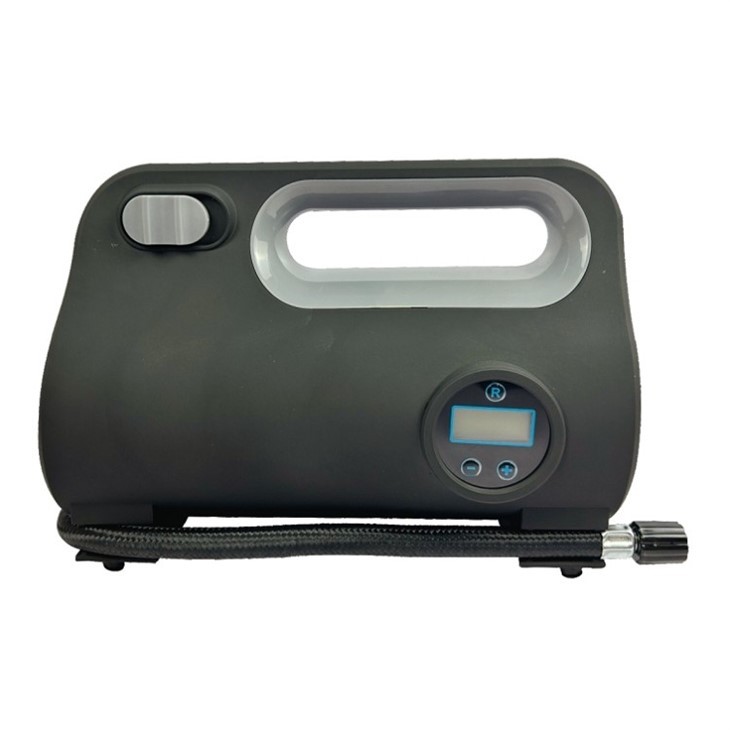
If you're in the market for an air tire inflator, we invite you to explore our range of products. Our team of experts is always available to help you choose the right inflator for your needs. Contact us today to start the procurement negotiation process and find the perfect air tire inflator for you.
References
- "Fluid Mechanics: Fundamentals and Applications" by Yunus A. Cengel and John M. Cimbala
- "Automotive Service: Inspection, Maintenance, Repair" by Jack Erjavec