


Truck Tire Inflators
A truck tire inflator is a device used to inflate and maintain the proper air pressure in truck tires. It is an essential tool for truck drivers, as proper tire inflation is crucial for safe and efficient transportation. Truck tire inflators are designed to withstand the high pressure and heavy-duty usage requirements of truck tires.
Ningbo Hope Auto Accessories Co., Ltd. is one of the leading manufacturers and suppliers of truck tire inflators in China. As we have world-leading production equipment and strong manufacturing capabilities, we warmly welcome you to wholesale advanced truck tire inflators at low price from our factory.
Company Profile
Ningbo hope auto accessories co, ltd. Is a high-tech factory mainly engaged in the r&d, production and sales of dc 12v car air compressor, vacuum cleaner and emergency tools. With the most of international entry certificates like ce, rohs, etc. As one of the leading and professional factory, we have own hardware workshop, motor shop, injection workshop, assembling workshop, and moulding workshop.
Why Choose Us
High quality
Our products are manufactured or executed to very high standards, using the finest materials and manufacturing processes.
Rich experience
Dedicated to strict quality control and attentive customer service, our experienced staff is always available to discuss your requirements and ensure complete customer satisfaction.
Quality control
We have professional personnel to monitor the production process, inspect the products and ensure that the final product meets the required quality level standards, guidelines and specifications.
24h online service
We try and respond to all concerns within 24 hours and our teams are always at your disposal in case of any emergencies.
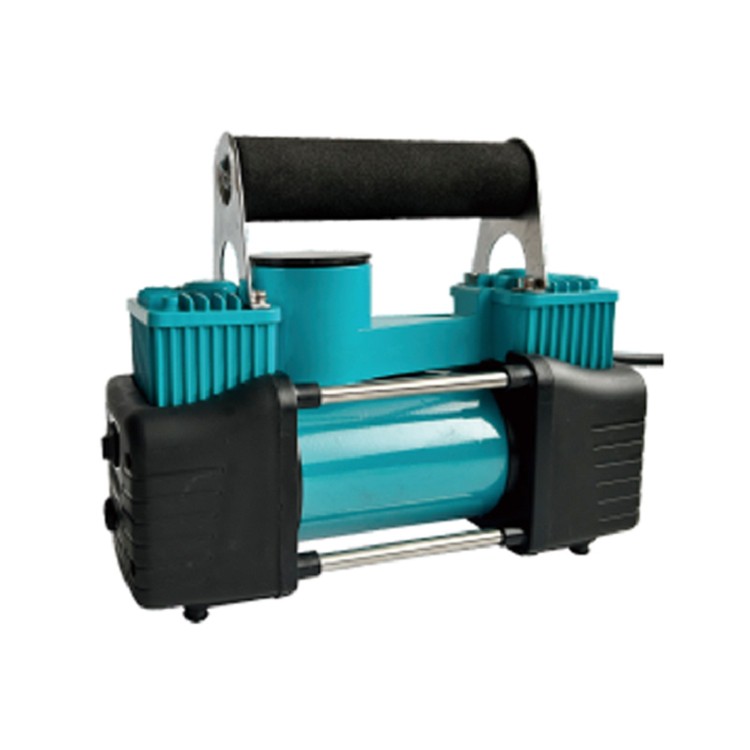
Digitalheavy Duty Tyre Inflator
Truck tire inflator is a versatile tool that can be used for more than just inflating tires. It can also be used for inflating air mattresses, pool toys, and other inflatables, making it a valuable tool to have on hand.

Truck tire inflator boasts a compact design that is easy for drivers to transport on their trucks. With a size of 9.9 x 9.3 x 4.7 inches, this inflator is easy to store and carry, making it essential to any driver's tool kit.
Truck tire inflator is designed to handle high-pressure situations. This product has 120 psi maximum pressure, making it ideal for inflating even the heaviest truck tires. It can easily inflate a tire within 3-5 minutes, saving drivers time and energy.
Product Introduction
A truck tire inflator is a device used to inflate and maintain the proper air pressure in truck tires. It is an essential tool for truck drivers, as proper tire inflation is crucial for safe and efficient transportation. Truck tire inflators are designed to withstand the high pressure and heavy-duty usage requirements of truck tires.
Advantages of Truck Tire Inflators
Enhanced fuel efficiency
Properly inflated tires experience less rolling resistance, which means that the vehicle requires less energy to push the tires along, leading to improved fuel efficiency and cost savings.
Extended tire life
Maintaining the correct tire pressure prevents excessive heat buildup and uneven wear patterns, helping to prolong the life of the tires and reduce the frequency of replacements.
Improved vehicle performance and safety
Optimal tire pressure ensures better handling and stability of the vehicle, reducing the likelihood of skidding during emergency braking or sharp turns, thereby enhancing overall safety on the road.
Rapid response to pressure loss
Portable truck tire inflators allow for quick and easy air replenishment, enabling the vehicle to continue operation even in remote locations or when faced with unexpected tire deflation, minimizing downtime.
A truck tire inflator is a device used to inflate and maintain the proper air pressure in truck tires. It is an essential tool for truck drivers, as proper tire inflation is crucial for safe and efficient transportation. Truck tire inflators are designed to withstand the high pressure and heavy-duty usage requirements of truck tires.
The future outlook for the truck tire inflator market is promising. The increasing demand for truck transportation, especially in emerging economies, is expected to drive the growth of the market. Additionally, the growing awareness about the importance of proper tire maintenance and the need to reduce fuel consumption are also expected to fuel the demand for truck tire inflators.
The current outlook of the truck tire inflator market is positive. The market is witnessing steady growth due to factors such as increasing fleet size, growing logistics and transportation sectors, and stringent government regulations regarding tire safety. Moreover, advancements in technology have led to the development of innovative truck tire inflators with features such as digital display, automatic shut-off, and portable designs, which are further contributing to market growth.
According to the market research, the truck tire inflator market is expected to grow at a compound annual growth rate (cagr) of % during the forecasted period. This growth can be attributed to various factors, including the expanding trucking industry, rising awareness about tire safety, and increasing investments in infrastructure development. The market is also witnessing the entry of new players, which is intensifying competition and driving innovation in the industry.
In conclusion, the truck tire inflator market is expected to experience significant growth in the coming years. The increasing demand for truck transportation, coupled with rising awareness about tire safety, is driving the market. Advancements in technology and the introduction of innovative products are also contributing to the growth of the market. Overall, the future outlook for the truck tire inflator market appears to be highly positive.

The global truck tire inflator market is witnessing several emerging trends. One major trend is the increasing adoption of automatic tire inflators, which provide convenience and efficiency for truck drivers by automatically sensing and inflating the tires to the correct pressure. Another trend is the integration of advanced technologies such as iot and cloud-based connectivity in tire inflator systems, allowing real-time monitoring of tire pressure and efficient maintenance scheduling. Additionally, the market is experiencing a surge in the demand for portable and compact tire inflators, driven by the growing trend of long-distance traveling and the need for quick tire repair solutions.
The motor has an output shaft that is connected via gears to the piston. The piston is forced up and down in the cylinder to produce air pressure. This compressed air feeds through the pressure hose into the tire valve stem. The electric motor can also power a fan that is used to cool down the air inflator.

How to Use Truck Tire Inflators
To start the car with the key, you can open the cigarette lighter socket at the acc position, then press the inflator switch to the "0" position, plug in the power plug, and the indicator light will light up. If the battery is low, it's a good idea to start the engine to ensure the battery has enough charge.
Place the inflator flat on the ground and "0.0" will appear on the display. If "0.0" is not displayed correctly, please press and hold the middle yellow key for more than 5 seconds to reset.
Unscrew the tire valve cap, place it in place, and screw the inflator's inflation tube onto the tire valve through the connector. The valve must be tightened in place and not operate.
At this time, the current tire inflation pressure is displayed on the inflator screen. Note the units shown, including bar, pounds per square inch, and kilopascal. You can press the yellow button to switch. As shown in the picture, my tire pressure was 28.5 psi, which is lower than the 30 psi stated in the instructions. I need to inflate the tires.
Press the key to the right of the yellow key to set the value displayed on the screen to 30 pounds per square inch, then press the inflator switch to the "1" position, and the inflator starts to work. The value on the screen will gradually increase to 30, 30.5, and pause for a few seconds until the tire pressure stabilizes at 30 psi before continuing to inflate.
Press the inflator switch to the "0" position and unscrew the connector of the inflation pipe from the tire valve. Move quickly to prevent the full air from running out. Then unplug the power plug and screw back the tire's valve cover.
Operation mechanism
Pre-set inflators: The operator sets the desired pressure level, and the inflator stops automatically when the device crosses the set pressure. These inflators have electronic components, ensuring high levels of accuracy. The pre-set feature allows the operator to multitask during inflation, improving efficiency, uptime, and safety. It also reduces the physical effort and fatigue usually associated with inflating large, high-pressure tires from flat.
Manual inflators: The operator sets the required pressure and stops the operation manually when the set pressure reaches. These inflators are portable and can be used in various locations without relying on the main power.
Corded and cordless
Corded inflators: Corded inflators use a 12v power plug that connects to the vehicle's 12v jack, drawing power from the car's battery. These are convenient and eliminate the need to keep an additional battery charged. The inflator can operate smoothly as long as the car's battery has power.
Flexible corded inflators: While most corded inflators operate solely on 12v power, some versatile models can utilize both 12v and 120v power sources. These inflators can be plugged into standard electrical outlets in addition to 12v jacks, offering increased flexibility and adaptability.
Cordless inflators: Cordless inflators use rechargeable batteries to power their motor and pump. Certain cordless inflators have built-in batteries that can be charged via usb or 120v power, while others feature removable batteries. They are flexible and don't rely on an additional power source to inflate tires.
Portable tire inflator
Portable tire inflators are compact and versatile tire inflators suitable for individual vehicle owners and small businesses.
They are typically powered by the vehicle's 12v power outlet and can be easily carried in the trunk.
Some models may have additional features such as built-in pressure gauges, led lights, and multiple nozzle attachments for inflating other inflatable items like sports equipment or air mattresses.
A pistol grip tire inflator is a portable car inflator that resembles the shape of a pistol or gun grip. The pistol grip design allows for easy handling and comfortable operation, as users can grip the inflator securely with one hand while using the other hand to connect the hose to the tire valve. These inflators typically have a built-in pressure gauge that displays the current tire pressure, allowing users to monitor and adjust the inflation process accurately.
Digital tire inflator
Digital tire inflators provide precise pressure readings on a digital display and allow users to set the desired psi (pounds per square inch) before inflation.
They have lcd screens that display real-time pressure information and automatically shut off once the desired pressure is reached, preventing over-inflation.
Heavy-duty industrial inflator
Heavy-duty industrial tire inflators are designed for commercial fleets and large-scale operations.
They have higher airflow rates and are capable of handling multiple tires continuously.
Some models may feature extra-long hoses and heavy-duty construction to withstand demanding working conditions.
How to Select a Tire Inflator



Power source
Choose corded or cordless tire inflators depending on the availability of the power source.
Pressure
The pressure capability of a tire inflator directly affects inflation speed. Choose a compressor with a minimum of 6.89 bar (100 psi) for faster inflation. Most inflators can easily fill car tires to 2.06 - 2.76 bar (30 - 40 psi).
Inflation time
The inflation time can vary from 10 to 30 minutes based on output capacity.
Duty cycle
The duty cycle is the time a compressor can run before it cools down. Most tire inflators have around 15-minute duty cycles due to heat generation during high-speed compression. An inflator with a shorter duty cycle works well when filling sports equipment or pool floats, but it can be a major drawback when filling the tires of large trucks. Therefore, many portable tire inflators clearly mention they're not designed for truck tires.
Gauge readability
Ensure easy reading of the pressure gauge for accurate inflation. Digital gauges with backlighting are user-friendly. Analog gauges with large numerals can also work well but might be challenging to read in low-light conditions.
Automatic shut-off
Automatic shut-off functions protect inflators from overheating. Shutoff can be triggered by pressure, temperature, or time, ensuring safe and efficient operation.
Hose length
An optimal hose length is 16 to 20 inches (40 to 51 cm), balancing convenience and manageability. Coiled hoses offer stretchability and are useful for off-road enthusiasts and large vehicle owners.
Weight and portability
Tire inflators are lightweight and portable, weighing less than a pound. Compact models are ideal for road trips, fitting in trunks and even glove boxes.
Ease of use
Features like programmable pressure regulators and built-in pressure gauges are user-friendly, preventing overfilling and providing real-time pressure display.
How To Inflate Car Tires
Before inflating the car tires, it's essential to know the recommended tire pressure, which can be found in the vehicle's owner's manual, on a sticker inside the driver's door jamb, or on the sidewall of the tire itself. Note the recommended psi (pounds per square inch) for each tire.
Portable air compressors, digital tire inflators, or cordless tire inflators are all suitable choices to inflate car tires.
Park the car on level ground and engage the parking brake. Ensure there is enough space around the tires.
Unscrew the valve cap from each tire. If using a tire inflator with a hose, connect the nozzle securely to the valve stem.
Set the desired psi based on the recommended tire pressure.
Switch on the inflator or air pump, and the tire will start to inflate.
Keep an eye on the tire pressure gauge (if available), or use the digital display to monitor the pressure.
Check the tire sidewall or inside the vehicle's door for the manufacturer's recommended pressure. For cars and trucks, it's usually between 2.06 - 2.75 bar (30 and 40 psi), while bicycles can range from 1.37 - 8.7 bar (20 to 130 psi) depending on tire size and style.
Check the tire pressure periodically while inflating to avoid over-inflation. If using a manual inflator without a pressure gauge, use a separate tire pressure gauge to measure the pressure and adjust accordingly.
Continue inflating the tire until it reaches the recommended pressure for that specific tire. Be careful not to over-inflate, as it can cause tire damage and reduce stability. In the event of accidentally over-inflating a tire, release some air by gently pressing the valve stem pin with a small object until the desired pressure reaches.
Once the tires are inflated to the correct pressure, screw the valve caps back on securely to protect the valve stem. Repeat the process for all tires.
If the inflator struggles to build pressure, inspect the tire for punctures or excessive wear that may be causing the issue.
FAQ
Hot Tags: truck tire inflators, China truck tire inflators manufacturers, factory, outdoor activities tire pump, Truck Tire Inflators, backup tire pump, first choice for tires, important for tires, exploration tire pump


Send Inquiry
