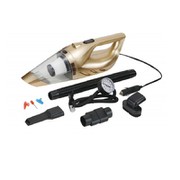
Service life of emergency starting power supply for automobiles
Jun 18, 2024
As an important vehicle tool, the service life of the emergency starting power supply for automobiles is an important consideration factor for car owners.
Definition of service life
The service life of an emergency power supply for automobiles usually refers to the number of cycles it can be used. The number of cycles refers to the number of times a battery can maintain its performance under certain charging and discharging conditions. According to the national standard, the emergency starting power supply for automobiles needs to be charged for 150 minutes in a constant current and constant voltage 1C charging system at a room temperature of 25 ℃, and discharged in a constant current 1C discharge system to 2.75V as one cycle. When one discharge time is less than 36 minutes, the test ends and the number of cycles must be greater than 300.
Specific values for service life
The service life of the emergency starting power supply for automobiles is roughly between 300 and 3000 times. For example, some brands of emergency starting power sources claim to be able to be used more than 3000 times. In addition, it has also been mentioned that the starting power of a typical car can last for about 3-5 years. These numbers reflect the differences in service life, depending on the quality and frequency of use of the product.
Factors affecting service life
In addition to the number of cycles mentioned above, there are also some factors that can affect the service life of the emergency start power supply for automobiles. Firstly, proper charging and discharging operations are crucial for extending service life. Secondly, avoiding bumps and using compatible chargers can effectively extend the battery's lifespan. In addition, the storage environment can also affect the performance and lifespan of the battery.
The service life of emergency starting power sources for automobiles is influenced by various factors, including cycle times, charging and discharging operations, usage and storage environments, etc. By using and maintaining it correctly, its service life can be maximized.